
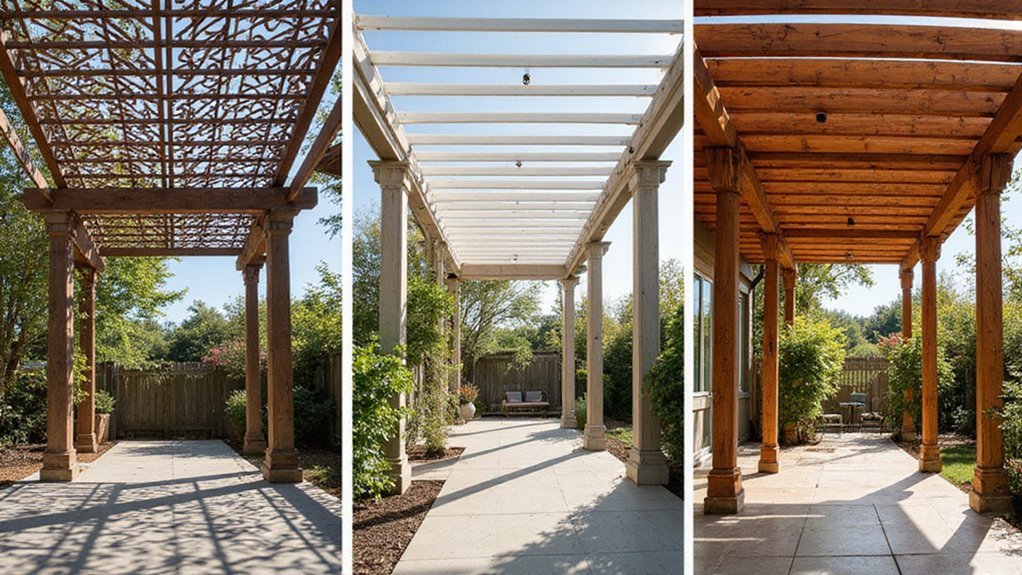
Is it really true that choosing a pergola roof comes down to just three options? The answer’s more nuanced than you’d think. You’re facing a decision that balances sunlight, weather protection, maintenance demands, and cost—each option delivering distinctly different results. Understanding how open designs, polycarbonate panels, and timber slats perform in your specific climate and match your aesthetic goals requires examining several key factors that’ll determine your satisfaction.
Open Pergolas: Maximum Light With Minimal Protection
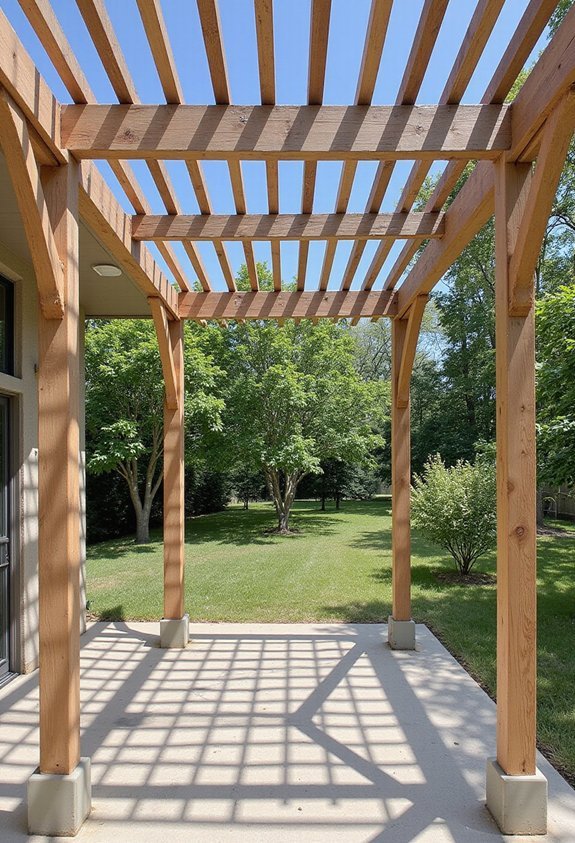
When you’re looking to add a pergola to your outdoor space, an open pergola—one with a slatted or latticed roof design that doesn’t fully cover the structure—offers you distinct advantages and tradeoffs that you’ll want to understand before making your decision. Open pergolas allow maximum sunlight to filter through the gaps, creating dappled shade that’s ideal for plants and natural illumination. You’ll appreciate the airy, unobstructed feeling they provide in your yard. However, you won’t get substantial protection from rain or intense sun exposure. These structures work best in climates with moderate weather patterns. They’re also the most affordable option and require minimal maintenance since they lack solid roofing materials that can accumulate debris or damage over time.
Polycarbonate Pergola Roofs: Weather Protection Year-Round
If you’re seeking substantial weather protection without sacrificing natural light, a polycarbonate pergola roof offers you a compelling middle ground between open slat designs and fully solid coverings. This transparent or translucent material shields you from rain, snow, and harsh UV rays while allowing diffused sunlight to filter through. You’ll benefit from year-round protection that keeps your outdoor space usable during unpredictable weather conditions. Polycarbonate roofs are lightweight, durable, and resistant to impact damage, making them practical for various climates. Installation requires proper support structures to handle weight distribution effectively. The material may require occasional cleaning to maintain clarity, but it resists yellowing better than older plastic alternatives. You’ll appreciate the balance polycarbonate provides between functionality and outdoor ambiance.
Timber Slats: The Classic Middle Ground
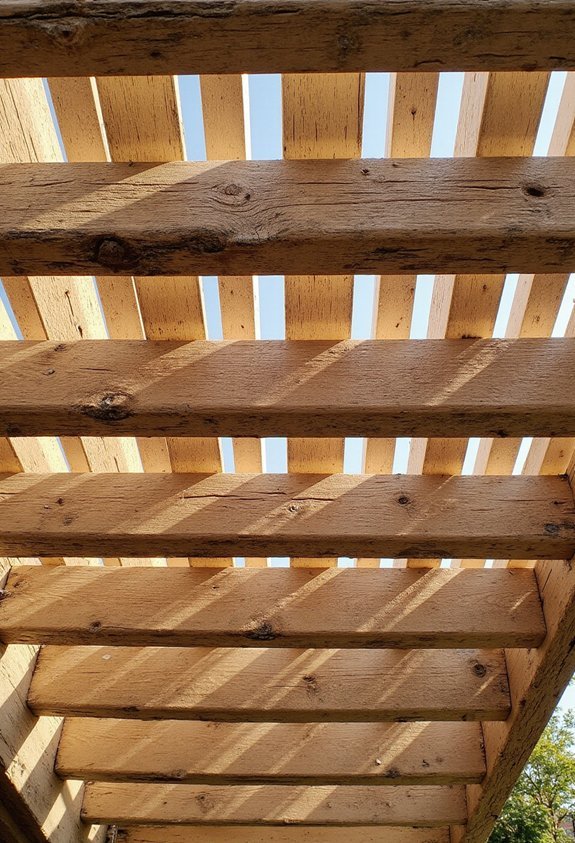
Because timber slats offer a timeless aesthetic that complements both traditional and contemporary outdoor spaces, they’ve remained a popular pergola roofing choice for decades. You’ll appreciate that wooden slats provide a middle ground between completely open pergolas and solid polycarbonate roofs, allowing filtered sunlight while offering moderate shade. The spaced arrangement of slats lets you control light penetration by adjusting their density and angle during installation. You should know that timber requires regular maintenance, including staining, sealing, and occasional repairs to prevent rot and weather damage. However, you’ll find that this natural material creates warmth and character that synthetic alternatives can’t replicate, making timber slats an excellent choice if you’re willing to invest time in upkeep while enjoying enhanced outdoor aesthetics.
Climate Considerations: Matching Your Region?
Your pergola’s roofing material won’t perform equally across different climates, so choosing one that matches your region’s weather patterns is essential for durability and function. In hot, sunny areas, polycarbonate or aluminum roofs reflect heat effectively, preventing excessive temperature buildup underneath. For regions experiencing heavy rainfall, you’ll want materials with proper drainage systems, like louvered or solid roofs that channel water away efficiently. Cold climates demand materials that withstand freeze-thaw cycles without cracking or warping—timber slats aren’t ideal here since moisture absorption causes damage. Coastal regions with salt spray require corrosion-resistant options like aluminum or treated polycarbonate. Consider your area’s humidity levels, wind speeds, and seasonal precipitation when making your selection, ensuring your pergola remains functional and structurally sound throughout the year.
How Much Shade Does Each Pergola Roof Provide?
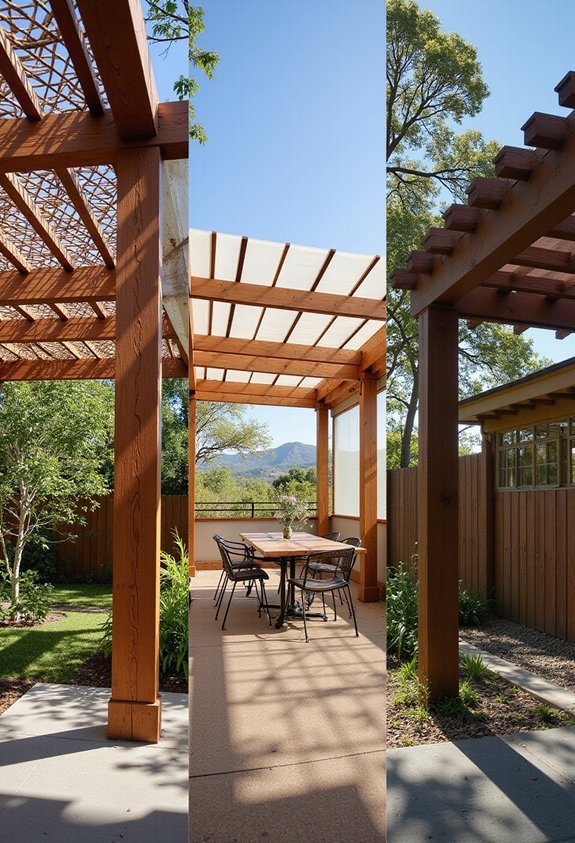
How much shade you’ll actually get depends entirely on which roofing material you’ve chosen, since each option blocks sunlight differently and at varying degrees. Open pergolas provide minimal shade, allowing dappled light through gaps between slats, which works best if you want filtered sunlight rather than complete protection. Polycarbonate roofing delivers substantial shade by blocking significant UV rays while still permitting some light diffusion, making it ideal for those seeking reliable sun protection without total darkness. Timber slats offer moderate shade depending on spacing and orientation, giving you adjustable coverage as the sun moves throughout the day. Your specific shade needs should guide your material selection, considering both the intensity of sun in your region and how you’ll use your pergola space.
Cleaning, Repairs, and Lifespan by Roof Type
Different pergola roofing materials require varying levels of maintenance, and understanding these differences’ll help you choose an option that fits your lifestyle and budget. Open pergolas demand minimal upkeep since they lack solid coverage, though you’ll occasionally remove debris from the framework. Polycarbonate roofs need regular cleaning to maintain transparency and typically last 10–15 years before requiring replacement due to UV degradation and scratching. Timber slats require the most attention, needing periodic sealing, staining, or painting every 2–3 years to prevent rot and weather damage, though they can last 15–20 years with proper care. Repairs vary considerably: polycarbonate panels are relatively inexpensive to replace individually, while timber slats may need targeted restoration. Open designs rarely need repairs beyond structural maintenance.
Pergola Roof Costs: Initial Price and Long-Term Value
When you’re planning a pergola project, the initial cost of roofing materials will likely be one of your biggest expenses, but it’s important to weigh that upfront price against how long the roof’ll last and how much you’ll spend maintaining it over time. Open pergolas cost the least initially, ranging from $500 to $2,000, though they require minimal upkeep. Polycarbonate roofs run between $2,000 and $5,000 and need occasional cleaning and UV protection reapplication. Timber slat roofs typically cost $3,000 to $6,000 and demand regular staining, sealing, and repairs. While polycarbonate requires moderate maintenance expenses annually, timber needs consistent investment. Calculate your total cost by combining the initial purchase price with projected maintenance costs over five to ten years to determine true value.
Installing Your Pergola Roof: DIY or Professional?
Once you’ve settled on which roofing material fits your budget and maintenance expectations, you’ll need to decide whether you’re going to install it yourself or hire a professional contractor to handle the job. DIY installation saves money but requires carpentry skills, proper tools, and significant time commitment. You’ll need to understand structural requirements, local building codes, and safety protocols to guarantee your pergola roof withstands weather conditions. Professional installation assures expertise, proper techniques, and warranty protection, though it costs considerably more. Consider your experience level, available time, and project complexity when deciding. If you’re confident in your abilities and have completed similar projects, DIY works well. Otherwise, hiring professionals ascertains quality results and prevents costly mistakes that could compromise your pergola’s integrity and longevity.
How Each Roof Style Looks
Your choice of pergola roof style dramatically affects your outdoor space’s visual appearance, and understanding how each option looks will help you select one that complements your home’s architecture and landscaping. Open pergolas create an airy, minimalist aesthetic with visible beams that showcase clean lines and architectural detail. Polycarbonate roofs offer a modern appearance while providing translucent coverage that diffuses light evenly throughout your space. Timber slats present a warm, natural look that blends seamlessly with garden environments, creating dappled shadow patterns that shift throughout the day. Each style produces distinct visual effects: open designs emphasize structure, polycarbonate emphasizes contemporary functionality, and timber emphasizes organic integration with your landscape, allowing you to prioritize aesthetics alongside practical considerations.
Choosing Your Pergola Roof: Final Decision Framework
How do you narrow down your pergola roof options when each style offers distinct advantages? Start by evaluating your primary needs: do you want maximum shade, weather protection, or seasonal flexibility? Consider your climate—open pergolas work well in mild areas, polycarbonate suits rainy regions, and timber slats offer moderate coverage everywhere. Next, assess your budget, since costs vary considerably across materials and installation. Think about maintenance requirements, as polycarbonate needs occasional cleaning while timber requires regular treatment. Finally, examine your aesthetic preferences and how each option complements your home’s design. By systematically working through these factors—climate, budget, maintenance, and appearance—you’ll identify which roof style aligns perfectly with your specific situation and long-term satisfaction.
Conclusion
You’ll find your ideal pergola roof by weighing three paths like a scales balancing budget, climate, and style. Open designs offer freedom but minimal shelter, polycarbonate roofs act as protective shields year-round, while timber slats bridge both worlds with natural charm. Your choice becomes a foundation for outdoor living, so evaluate your region’s weather patterns, maintenance commitment, and financial resources carefully before deciding which option anchors your space.