
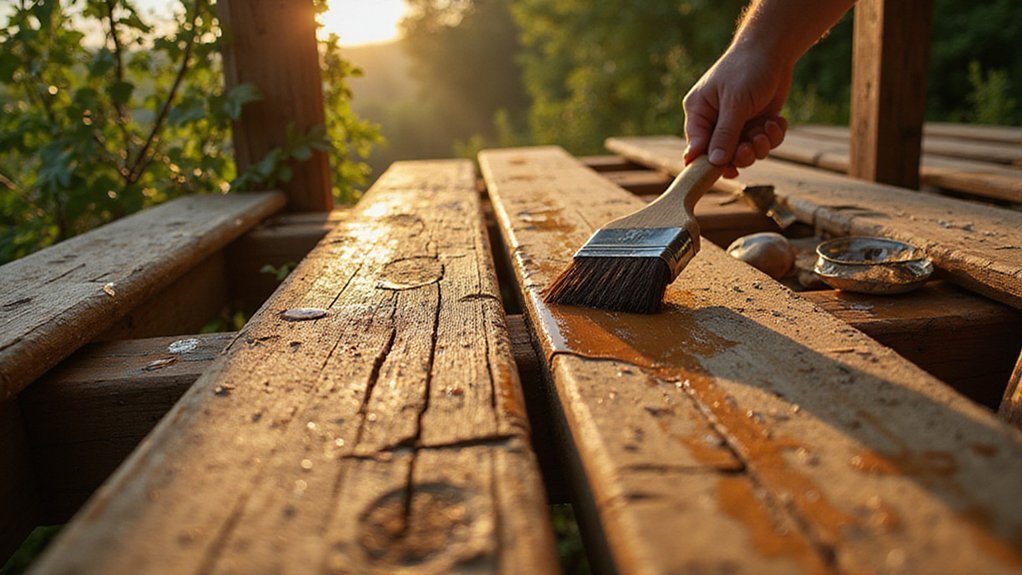
Studies show that properly maintained timber pergolas can last 15-20 years longer than neglected ones. You’ve invested in a beautiful outdoor structure, but without the right maintenance routine, wood naturally succumbs to cracks, rot, and weathering. The good news? You can prevent most damage yourself by understanding what causes deterioration and when to act. Here’s what you need to know.
Why Your Timber Pergola Weathers (and How to Stop It)
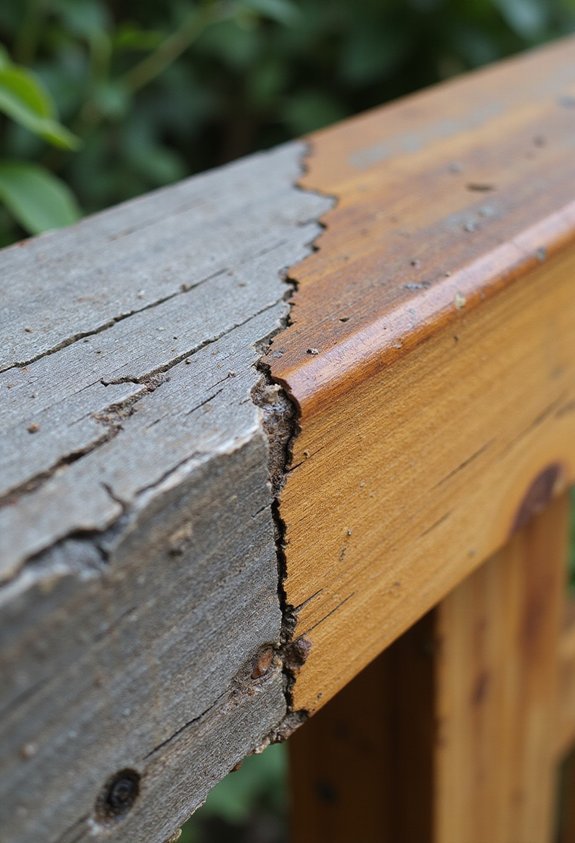
Wood naturally weathers because it’s constantly exposed to moisture, ultraviolet light, and temperature changes that work together to break down its protective outer layer. When water penetrates the wood’s surface, it causes the fibers to swell and contract repeatedly, creating cracks and splits over time. UV rays from the sun fade the wood’s color and weaken its structural integrity by breaking down the lignin that binds the wood fibers together. Temperature fluctuations accelerate this damage by expanding and contracting the material inconsistently. To stop weathering, you’ll need to apply a protective sealant or stain every two to three years, which creates a barrier against moisture and UV damage. Regular maintenance and timely reapplication of these protective coatings will substantially extend your pergola’s lifespan and preserve its appearance.
Pick the Best Sealant for Your Climate
The right sealant choice depends heavily on your local climate and weather patterns, since different environments present distinct challenges to your timber pergola’s protection. In humid regions, you’ll want water-repellent sealants that prevent moisture absorption and mold growth, while arid climates require UV-blocking formulas that shield wood from intense sun damage and cracking. Cold climates demand flexible sealants that expand and contract with temperature fluctuations without splitting the wood. Before selecting a product, research your area’s average rainfall, humidity levels, and temperature ranges. Check sealant labels for compatibility with your specific conditions, and consider consulting local hardware experts who understand regional weather patterns. Applying the correct sealant guarantees your pergola remains protected and beautiful for years.
Spring: Clean and Check for Winter Damage
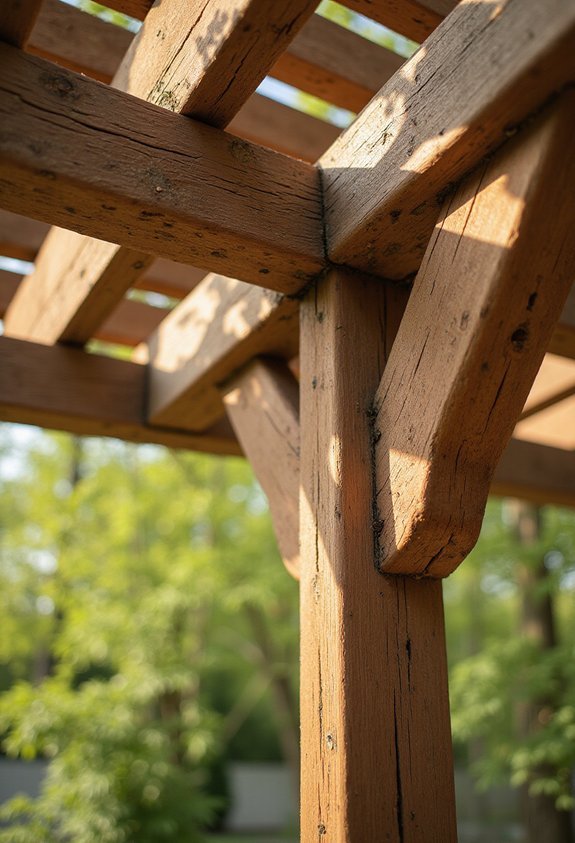
After winter’s harsh conditions have passed, it’s time to inspect your timber pergola thoroughly for any damage that cold weather, snow, ice, and moisture may have caused. Look for cracks, splits, or splintering wood, particularly where beams connect and in areas exposed to direct sunlight. Check for soft spots by pressing your fingernail into the wood; soft areas indicate potential rot requiring immediate treatment. Examine all joints and fasteners to verify they’re still secure and haven’t loosened from freeze-thaw cycles. Clear away debris, leaves, and dirt that accumulated on horizontal surfaces, as these trap moisture and promote decay. Wash your pergola with a gentle solution of water and mild soap, using a soft brush to remove accumulated grime. Document any damage you find for planning repairs or restoration work.
Summer: Seal and Stain Before UV Hits
Once you’ve completed your spring inspection and repairs, summer’s arrival brings intense UV radiation that can rapidly degrade your timber pergola’s wood fibers, fade its color, and accelerate moisture damage if left unprotected. You’ll want to apply a high-quality wood sealer and stain before mid-June, when UV exposure peaks, ensuring you’re protecting your investment during the season’s harshest conditions. Choose products specifically formulated for exterior timber that offer both UV protection and water resistance, then follow the manufacturer’s application instructions carefully, including drying times between coats. Apply the sealer first to create a protective barrier, then add stain for color enhancement and additional defense. Work during cooler morning hours to allow proper penetration, and reapply every two to three years to maintain ideal protection against summer’s relentless sun exposure.
Fall: Prepare Your Pergola for Storms
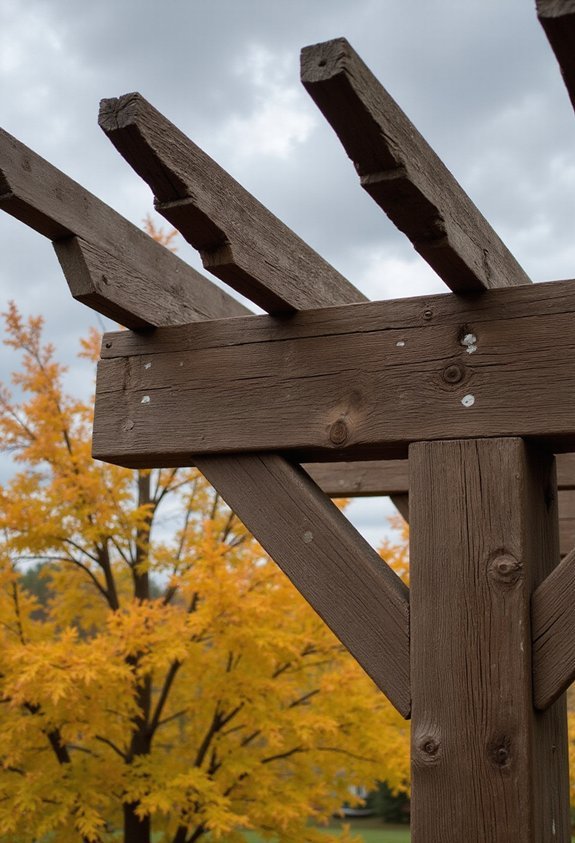
As autumn weather patterns bring stronger winds, heavy rains, and unpredictable storms to most regions, your timber pergola faces increased stress from environmental forces that can cause significant structural damage if you haven’t taken proper precautions. You’ll want to inspect all bolts, screws, and connectors for looseness, tightening them securely to reinforce structural integrity. Check for any cracked or split beams, which can compromise stability during high winds. Clear debris from the top and gutters to prevent water pooling and weight accumulation. Trim nearby tree branches that could break and fall onto your pergola during storms. Consider installing additional bracing or support cables if your pergola’s location makes it particularly vulnerable to severe weather conditions.
Winter: Protect Against Moisture and Freeze Damage
Winter brings freezing temperatures and moisture that can cause serious damage to your timber pergola, making protective measures essential to safeguard against rot, cracking, and structural weakening. You’ll want to apply a waterproof sealant before temperatures drop, creating a protective barrier against snow and ice accumulation. Clear debris from the pergola’s surface regularly, as trapped moisture accelerates deterioration when frozen. Check that water drains properly from the structure, preventing pooling that freezes and expands, causing wood splitting. You should inspect fasteners and joints monthly, as freeze-thaw cycles loosen connections. If you live in areas with heavy snow, consider temporary bracing for added support under the weight’s stress. Monitor for ice dams that form along edges, removing them carefully to shield your pergola and ensure it survives winter intact.
Spot Early Signs of Pergola Rot and Damage
Early detection of rot and structural damage can save your timber pergola from requiring costly repairs or complete replacement, so you’ll want to establish a regular inspection routine that focuses on the most vulnerable areas where moisture collects and wood deteriorates fastest. Check the base posts where they meet the ground, as soil contact accelerates decay. Press your finger against the wood; soft, spongy spots indicate rot development. Examine joints and connections where water pools, looking for discoloration, fungal growth, or separation. Inspect the underside of beams and cross-braces for dark stains or peeling bark. Look for insect damage like small holes or tunnels. You should perform these inspections seasonally, especially after heavy rain or snow melt, catching problems before they compromise your pergola’s structural integrity and longevity.
Fix Cracks, Rot, and Loose Joints Yourself
Once you’ve identified damage during your inspections, you can tackle many common problems without hiring a professional contractor, saving yourself significant money while extending your pergola’s lifespan. For small cracks, you’ll want to use wood filler, which you can apply directly into the damaged areas and sand smooth once it’s dry. When you’re dealing with rot, you’ll need to remove the affected wood completely, then treat the area with wood preservative before applying new timber patches. Loose joints require you to tighten bolts and screws using appropriate tools, and if wood’s severely compromised around connection points, you should replace those sections entirely. These straightforward repairs, done promptly, prevent minor issues from becoming expensive structural problems.
Handle Simple Fixes Yourself (and Know When to Ask for Help)
While the repairs mentioned above—filling cracks, treating rot, and tightening joints—are tasks you can complete on your own, knowing where to draw the line between DIY work and professional help will save you time, money, and potential headaches down the road. You should handle minor surface cracks, small rot patches, and loose bolts independently, as these require only basic tools and materials. However, you’ll want to call a professional carpenter when you encounter structural damage, extensive rot affecting load-bearing beams, or widespread pest infestations. Additionally, if your pergola’s foundation shows signs of settling or shifting, seek expert assessment immediately, since these issues compromise the entire structure’s stability and safety, requiring specialized knowledge and equipment to address properly.
Year-Round Maintenance Checklist to Stay Ahead
To keep your timber pergola in excellent condition throughout the year, you’ll want to establish a regular maintenance schedule that addresses seasonal challenges before they become costly problems. Spring requires inspecting for winter damage, cleaning debris, and applying fresh sealant. Summer demands checking for pest activity and ensuring proper drainage after heavy rains. Fall involves clearing leaves, trimming nearby branches, and preparing wood for winter exposure. Winter calls for monitoring snow accumulation and ice damage while avoiding salt damage to the wood. Document everything you observe, photograph problem areas, and note when treatments were applied, creating a helpful reference for future maintenance decisions and identifying recurring issues that might need professional intervention.
Conclusion
By following these seasonal maintenance steps, you’ll help your timber pergola gracefully age while maintaining its attractive appearance, ensuring it remains a beautiful outdoor feature for years to come. Regular inspections, timely sealant applications, and prompt attention to minor imperfections prevent larger issues from developing, allowing your investment to weather the elements with dignity and strength throughout its lifespan.