
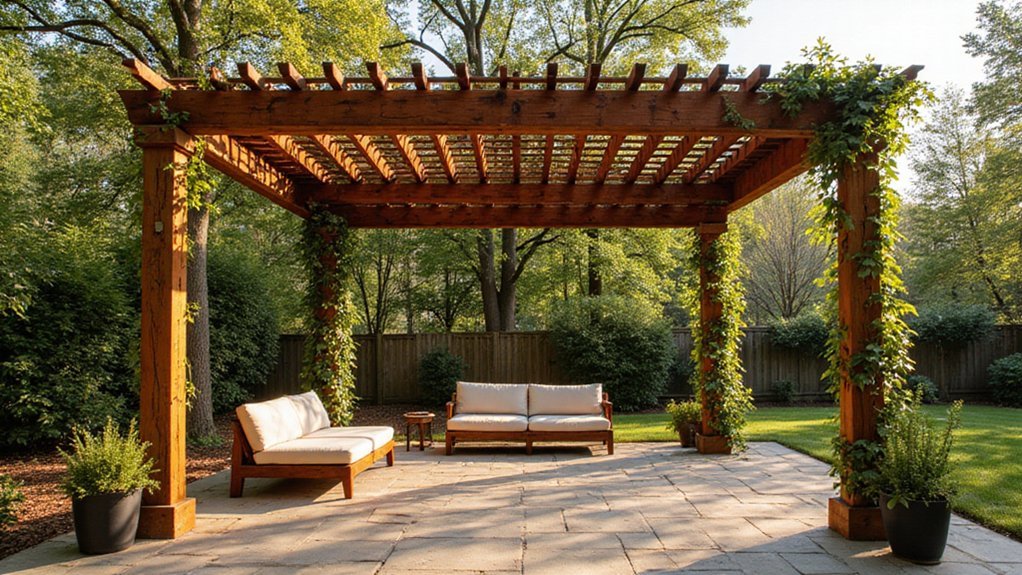
Is it true that adding a timber pergola can genuinely transform your backyard into a more valuable and inviting space? You’ll discover that the answer depends on several critical factors: the type of wood you choose, your installation approach, and how strategically you design the structure. Understanding these elements will help you decide whether this investment truly makes sense for your home and lifestyle—but first, you need to know what actually separates successful pergola projects from disappointing ones.
Should You Add a Timber Pergola to Your Backyard?
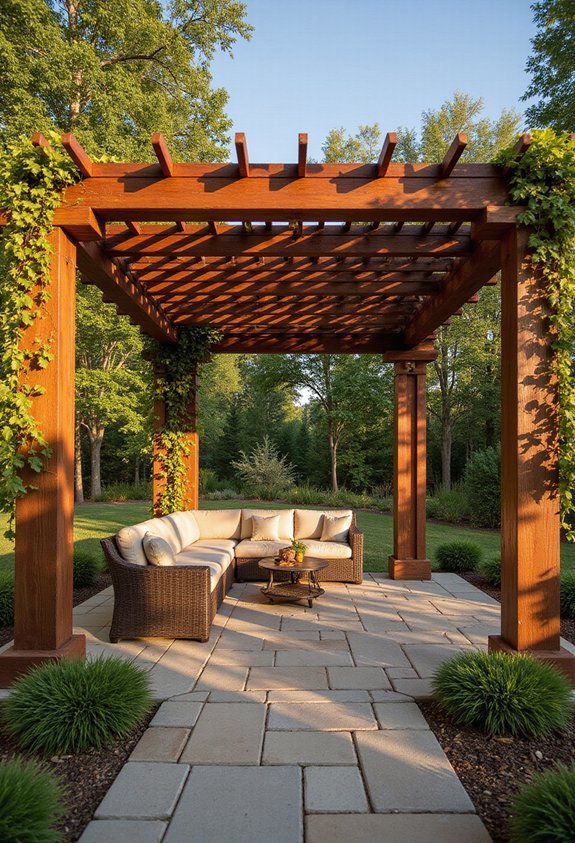
If you’re thinking about improving your outdoor space, a timber pergola might be exactly what you’re looking for because it combines practicality with visual appeal. A timber pergola provides partial shade, which allows dappled sunlight to filter through while protecting you from harsh direct rays. You’ll gain additional outdoor living space that’s perfect for entertaining guests, relaxing with family, or enjoying meals outside. Timber pergolas enhance your property’s aesthetic value, creating an attractive focal point that complements various architectural styles. Before deciding, consider your budget, available yard space, and maintenance commitment, as timber requires regular staining or sealing to prevent weather damage. Evaluate your climate conditions, since wood performs differently in various regions. When you carefully assess these factors, you’re better positioned to determine whether adding a timber pergola aligns with your outdoor goals.
Shade Without Sacrificing Sunlight
One of the biggest advantages of a timber pergola is its unique ability to create shade without completely blocking out the sun, and understanding how this works can help you design an outdoor space that’s comfortable year-round. The slatted roof design allows filtered sunlight to pass through while reducing intense heat and glare, which means you’ll enjoy natural light without harsh UV exposure. You can adjust the angle and spacing of the wooden beams to control how much light enters your space during different seasons. In summer, you’ll appreciate the cooling shade, while winter sunlight can still reach your patio. This balanced approach lets you maintain comfortable outdoor temperatures while preserving the brightness and openness your yard needs.
Wood Types and What Actually Lasts
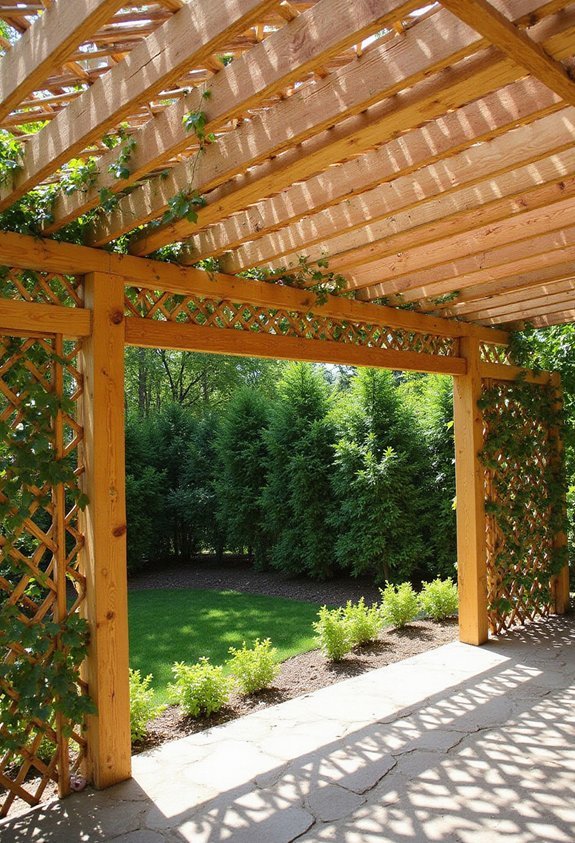
Choosing the right wood for your timber pergola isn’t a minor decision—it’s the foundation of how long your structure will stand up to weather, insects, and everyday wear. You’ll find that hardwoods like cedar, redwood, and composite materials offer superior durability compared to softwoods, which deteriorate quickly when exposed to moisture and UV rays. Cedar naturally resists decay and insects, making it an excellent choice for outdoor structures. Redwood provides similar benefits with attractive coloring. If you’re seeking maximum longevity, pressure-treated lumber resists rot effectively, though it requires regular maintenance. For the longest-lasting pergola, consider tropical hardwoods like ipe or cumaru, which withstand harsh conditions exceptionally well. Your initial investment in quality wood pays dividends through decades of reliable performance.
How Much Does a Pergola Cost?
What’s the actual price tag on a timber pergola, and how do your material choices affect the final bill? You’ll typically spend between $1,500 and $5,000 for a basic pergola, though premium designs can exceed $10,000. The cost hinges primarily on wood type—softwoods like pine cost less initially but require frequent maintenance, while hardwoods and treated lumber demand higher upfront investment but last considerably longer. Size matters greatly; larger structures naturally require more materials and labor. Additional expenses arise from foundation work, installation complexity, and finishing treatments like staining or sealing. You should also factor in location-based costs, as labor rates vary regionally. Obtaining multiple quotes from contractors helps you understand pricing variations and confirms you’re comparing equivalent specifications across proposals.
Install It Yourself or Hire Help?
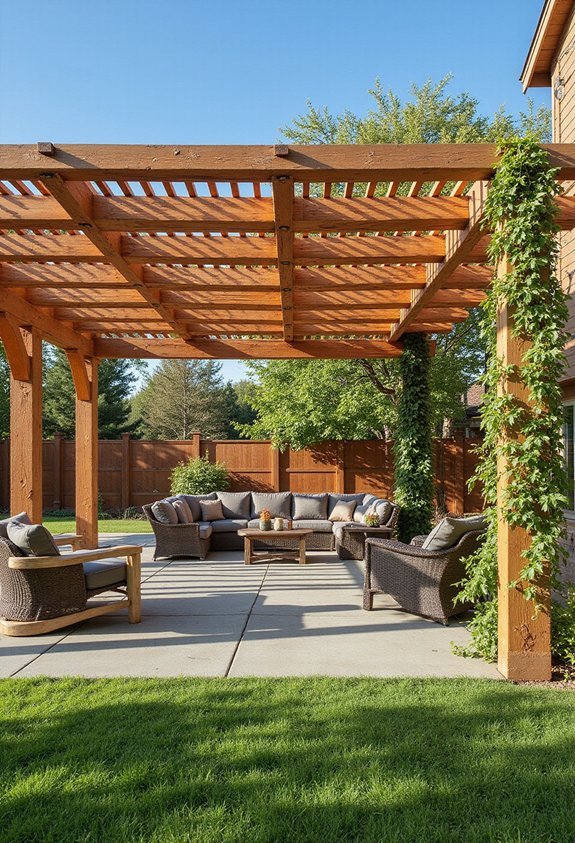
Understanding the cost breakdown helps you make an informed decision about who should actually build your pergola, and this choice considerably impacts both your final expenses and the quality of your finished structure. If you’re experienced with tools and carpentry, a DIY approach saves you money on labor costs, though you’ll invest significant time and effort. Hiring a professional contractor guarantees proper construction, correct measurements, and structural integrity, but you’ll pay labor fees that typically range from thirty to fifty percent of your total project cost. Consider your skill level, available time, and complexity honestly before deciding, because mistakes during installation can become expensive to fix and compromise your pergola’s durability and safety.
Place Your Pergola for Maximum Impact
Since your pergola’s location determines how well it’ll function and how much you’ll enjoy using it, you’ll want to carefully evaluate your yard before deciding where to install it. Consider sun exposure throughout the day, as pergolas work best in areas receiving four to six hours of sunlight. Position your structure near entertaining spaces like patios or decks to create natural gathering areas. Guarantee adequate clearance from trees, power lines, and structures to prevent damage and maintenance issues. Evaluate drainage patterns to avoid water pooling around the foundation. Think about prevailing winds and how they’ll affect comfort levels. Choose a spot visible from your home’s main windows to maximize the visual impact on your property’s curb appeal and landscape design.
What to Plant for Year-Round Beauty
Once you’ve positioned your pergola in the ideal location, you’ll want to select climbing plants and surrounding vegetation that’ll provide continuous visual interest throughout all four seasons. Consider planting evergreen vines like English ivy or clematis, which maintain their foliage during winter months when deciduous plants lose their leaves. For spring blooms, incorporate flowering clematis varieties that produce vibrant blossoms. Summer brings opportunities for fast-growing vines such as honeysuckle, which offers both color and fragrance. In autumn, plant ornamental grapes or Virginia creeper for stunning foliage transformations. Combine these climbing plants with nearby shrubs and perennials in complementary colors to enhance your pergola’s visual impact year-round, ensuring your outdoor space remains attractive regardless of the season.
Turn Your Backyard Into an Entertaining Space
With your pergola’s plants established and your outdoor space looking attractive throughout the year, you’re ready to transform that area into a functional gathering spot for family and friends. You can arrange comfortable seating beneath the pergola’s shade, creating an inviting environment for conversation and relaxation. Installing outdoor lighting fixtures along the pergola’s beams extends usability into evening hours, allowing you to host gatherings after sunset. Consider adding a dining table or lounge furniture to accommodate various activities, from meals to casual hangouts. You might incorporate weatherproof storage solutions for cushions and entertaining supplies. These practical additions, combined with your pergola’s natural beauty and shade, establish a versatile outdoor room that maximizes your property’s entertaining potential while encouraging regular use throughout different seasons.
The Resale Value a Pergola Actually Adds
As you invest in improving your outdoor space with a timber pergola, you’ll want to understand how this addition affects your home’s market value and appeal to future buyers. A well-constructed timber pergola typically adds between 5 to 15 percent to your property’s resale value, depending on your local real estate market and the pergola’s quality. Buyers appreciate expanded outdoor living spaces that’re functional and aesthetically pleasing, which makes your home more competitive. However, the return on investment depends on several factors: the pergola’s construction quality, maintenance condition, and how well it integrates with your home’s architectural style. Premium materials and professional installation generally yield better returns than budget options. To optimize resale value, your pergola’s design should complement your home’s existing features and remain in excellent condition throughout ownership.
Create an Outdoor Retreat You’ll Actually Use
Beyond the financial benefits of adding a timber pergola to your property, you’ll find that the real value comes from creating an outdoor space you’ll genuinely enjoy spending time in throughout the year. When you design your pergola with functionality in mind, you’re investing in daily comfort and relaxation. Consider adding comfortable seating, weather-resistant tables, and ambient lighting that transforms your space into an inviting retreat. Position your pergola strategically to provide shade during hot afternoons while allowing winter sunlight to warm your area. Install outdoor speakers, cushions, and plants that enhance the atmosphere. By thoughtfully planning these elements, you’ll create a destination where you’ll naturally gravitate, making your outdoor investment something you’ll actually use regularly rather than simply admire from inside.
Conclusion
You’ve discovered how a timber pergola transforms your backyard into a functional, beautiful space that you’ll actually use regularly, and coincidentally, it simultaneously increases your property’s resale value. By selecting durable hardwoods, planning strategic plantings, and deciding whether you’ll install it yourself or hire professionals, you’re making a practical investment that balances shade with sunlight while enhancing your home’s aesthetic appeal and outdoor living potential.