While conventional pergolas deteriorate within years, sustainably sourced timber structures can protect your outdoor space for two decades or more. You face a critical choice: investing in wood that depletes forests or selecting responsibly managed materials that preserve them. FSC-certified options, reclaimed wood, and durable domestic species like cedar offer proven longevity, but distinguishing genuine sustainable choices from greenwashed products requires understanding specific certifications and material properties. What makes one timber option genuinely eco-friendly?
Why Sustainable Timber Protects Your Pergola Investment
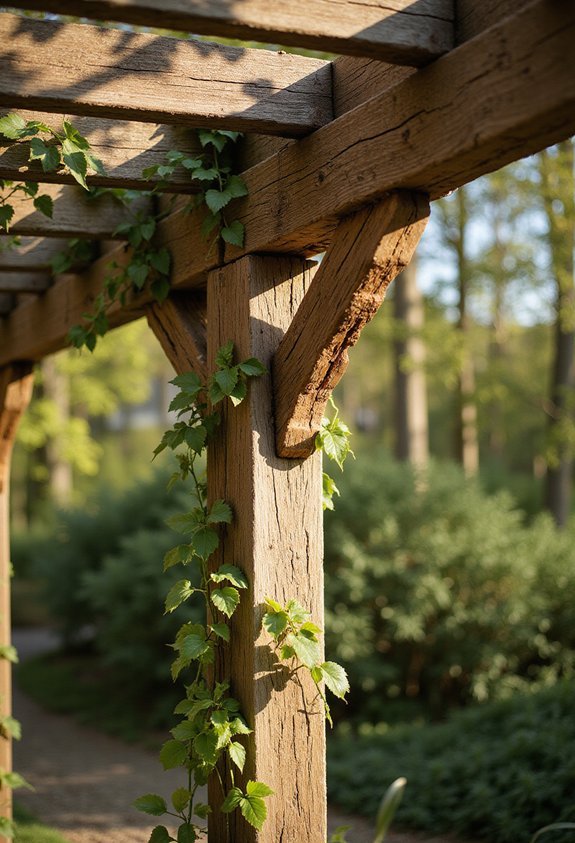
When you’re investing in a pergola for your outdoor space, choosing sustainable timber becomes one of your most important decisions because it directly affects how long your structure’ll last and how much maintenance you’ll need to perform over time. Sustainable timber sourced from responsibly managed forests contains natural properties that resist rot, insects, and weathering better than inferior wood options. You’ll find that certified sustainable woods like FSC-approved timber maintain their structural integrity through harsh weather conditions, meaning your pergola stays stronger longer. This durability translates directly into lower repair costs and reduced replacement frequency. Additionally, sustainable timber doesn’t deplete natural resources, so you’re protecting both your investment and the environment simultaneously while ensuring your pergola provides reliable shade and shelter for decades.
Pressure-Treated vs. Naturally Durable Woods: Which Lasts Longer?
How do you choose between pressure-treated timber and naturally durable woods for your pergola, and which option’ll actually last longer in your outdoor environment? Pressure-treated wood contains chemical preservatives that protect against rot and insects, typically lasting 15 to 20 years with proper maintenance. Naturally durable woods like cedar, redwood, and teak contain inherent oils that resist decay, often lasting 20 to 25 years or longer. However, naturally durable woods cost considerably more upfront. Pressure-treated lumber offers better affordability and stronger pest resistance, making it ideal for high-moisture climates. Naturally durable woods provide superior aesthetics and environmental benefits, though they require regular sealing. Your choice depends on your budget, climate conditions, and sustainability priorities for your pergola investment.
FSC-Certified Wood: The Sustainable Gold Standard
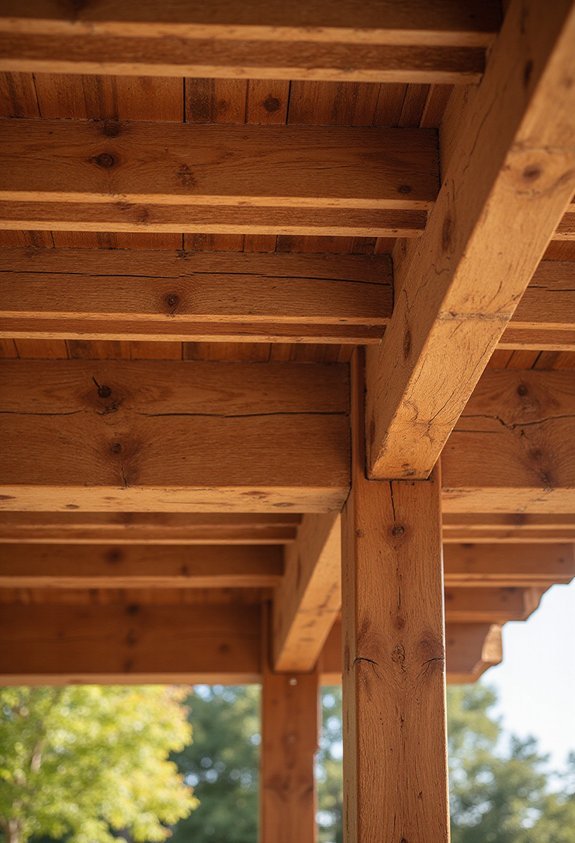
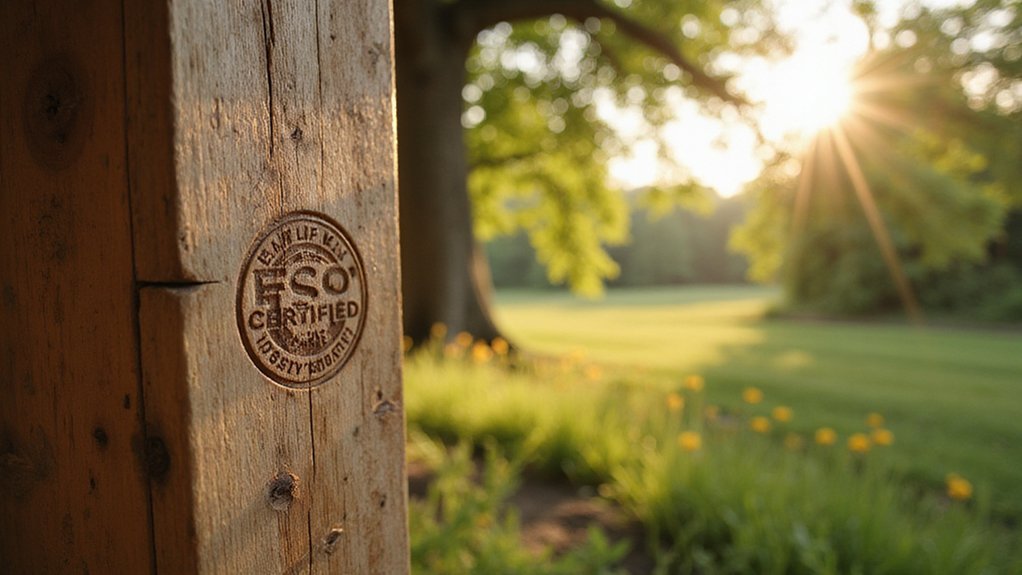
If you’re committed to making environmentally responsible choices for your pergola, FSC-certified wood represents the gold standard in sustainable timber sourcing. The Forest Stewardship Council, or FSC, sets rigorous standards that guarantee forests are managed responsibly, protecting ecosystems and worker rights. When you choose FSC-certified lumber, you’re supporting forestry practices that prevent deforestation and maintain biodiversity. These woods come from operations that replant trees and monitor environmental impact continuously. You’ll find that FSC certification requires independent audits, assuring transparency throughout the supply chain. While FSC-certified wood may cost slightly more than conventional options, the investment reflects genuine environmental stewardship. Your pergola constructed from FSC wood demonstrates commitment to preserving forests for future generations, making it a genuinely sustainable choice.
Reclaimed Wood: The Most Sustainable Pergola Option
Since reclaimed wood comes from existing structures rather than freshly harvested trees, it stands as the most sustainable pergola material you can select. You’ll benefit from reduced environmental impact, as no new forests are cleared for your project. Reclaimed wood also carries unique character, featuring distinctive grain patterns and weathered finishes that new lumber can’t replicate. When you choose reclaimed materials, you’re supporting circular economy practices that give discarded wood a second life. You should understand that sourcing reclaimed wood requires more effort and patience than purchasing standard lumber, and costs may be higher. However, the environmental advantages and aesthetic appeal justify the investment. You’ll find reclaimed wood through salvage yards, architectural salvage companies, and online marketplaces specializing in reclaimed materials for construction projects.
Sustainable Alternatives to Endangered Tropical Hardwoods
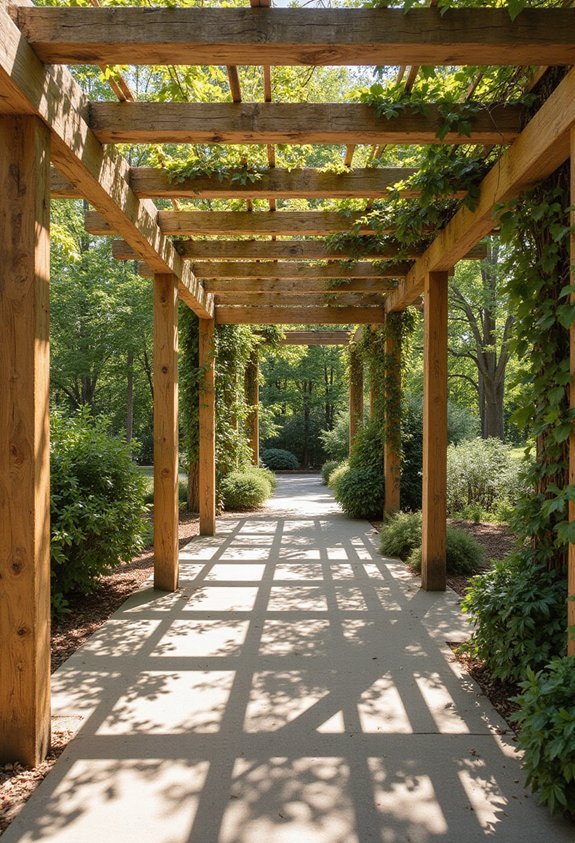
Tropical hardwoods like teak, mahogany, and ipe‘ve become increasingly scarce due to deforestation, and you’ll want to know that several sustainable alternatives can deliver comparable durability and aesthetic qualities for your pergola without contributing to habitat destruction. Consider domestically sourced hardwoods such as oak, cedar, and ash, which naturally resist decay and require minimal treatment. Bamboo offers another excellent option, growing rapidly and providing remarkable strength despite its lighter weight. You might also explore certified sustainable tropical woods from responsibly managed forests, identifiable by Forest Stewardship Council labels. Composite materials blending reclaimed wood fibers with recycled plastics provide durability with reduced environmental impact. Each alternative offers distinct advantages regarding longevity, maintenance requirements, and visual appeal, allowing you to select the option best matching your pergola’s specific needs and your environmental values.
Domestic Softwoods: Why They’re Underrated for Sustainability
While many people overlook softwoods like pine, fir, and spruce when building pergolas, these domestic options‘ve actually become increasingly valuable for sustainable construction projects because they’re grown in managed forests throughout North America, where replanting programs safeguard continuous supply without the environmental destruction associated with tropical hardwood harvesting. You’ll find that domestic softwoods require noticeably less transportation, reducing your project’s carbon footprint considerably. These woods naturally resist decay when properly treated, ensuring your pergola lasts decades without compromising environmental integrity. You can source them locally, supporting regional forestry economies while minimizing shipping emissions. Additionally, you’ll discover that softwoods are more affordable than exotic alternatives, allowing you to invest savings into quality treatment and maintenance, ultimately creating a durable, environmentally responsible outdoor structure.
Bamboo Pergolas: Fast-Growing Alternative to Traditional Wood
Bamboo represents a remarkable sustainable option for pergola construction because it grows considerably faster than conventional timber, reaching maturity in just three to five years compared to the decades required for most tree species. You’ll find that bamboo’s rapid regeneration makes it an excellent environmental choice, as harvesting doesn’t require replanting entire forests. Additionally, bamboo naturally resists pests and decay, reducing your need for chemical treatments that harm ecosystems. When you select bamboo for your pergola, you’re choosing a material that’s stronger than many hardwoods yet noticeably lighter, making installation easier. Bamboo’s aesthetic appeal offers you versatility in design, ranging from modern to traditional styles. You should verify that your bamboo comes from responsibly managed plantations, ensuring you’re supporting genuinely sustainable forestry practices that protect biodiversity and soil health.
Spot Greenwashing: Verify Wood Certifications Before You Buy
Because companies often make misleading claims about their products’ environmental friendliness, you’ll need to become a careful investigator before purchasing materials for your pergola. Look for third-party certifications like the Forest Stewardship Council (FSC), Sustainable Forestry Initiative (SFI), or the Programme for the Endorsement of Forest Certification (PEFC) on product labels and documentation. These organizations verify that timber comes from responsibly managed forests where trees are replanted and ecosystems are protected. Request certification papers from suppliers, and don’t rely solely on marketing language containing words like “eco-friendly” or “green.” Check the company’s website for detailed sourcing information and environmental practices. Legitimate manufacturers openly share their supply chain details and certification credentials with customers.
Sustainable Pergola Wood: Budget-Friendly Options
Once you’ve verified that your timber’s certified as sustainable, you’ll find that choosing eco-friendly materials doesn’t have to drain your wallet, especially when you know where to look and what options work best for your budget. Reclaimed wood from old barns and buildings offers excellent quality at lower prices than newly harvested timber, while fast-growing woods like bamboo and pine provide affordable alternatives that’re still environmentally responsible. Consider purchasing directly from local mills rather than retailers, which eliminates middleman markups and supports your community. Engineered wood composites made from recycled materials cost less upfront and require minimal maintenance, reducing long-term expenses. Comparing prices across multiple suppliers helps you identify competitive rates without compromising sustainability standards or certification requirements.
Eco-Friendly Maintenance: Protecting Your Sustainable Wood Pergola
After you’ve invested in sustainable timber and secured competitive pricing through smart sourcing, protecting your pergola with environmentally responsible maintenance practices will extend its lifespan and preserve your investment for years to come. You’ll want to apply natural finishes like linseed oil or water-based sealers annually, which protect wood from moisture and UV damage without toxic chemicals. Inspect your pergola regularly for signs of rot, insect damage, or weathering, addressing problems immediately to prevent costly repairs. Clean debris from joints and crevices to prevent water accumulation, which causes deterioration. Consider using non-toxic treatments for pest prevention, and avoid pressure washing, which damages wood fibers and strips protective coatings. These eco-friendly maintenance strategies keep your sustainable pergola beautiful while minimizing environmental impact.
Conclusion
You’ve now got literally a million reasons to choose sustainable timber for your pergola, from FSC-certified wood to reclaimed materials that protect both your investment and the environment. By verifying certifications, selecting naturally durable species like cedar or bamboo, and maintaining your structure properly, you’ll enjoy decades of reliable shade while making responsible choices that benefit forests and future generations.